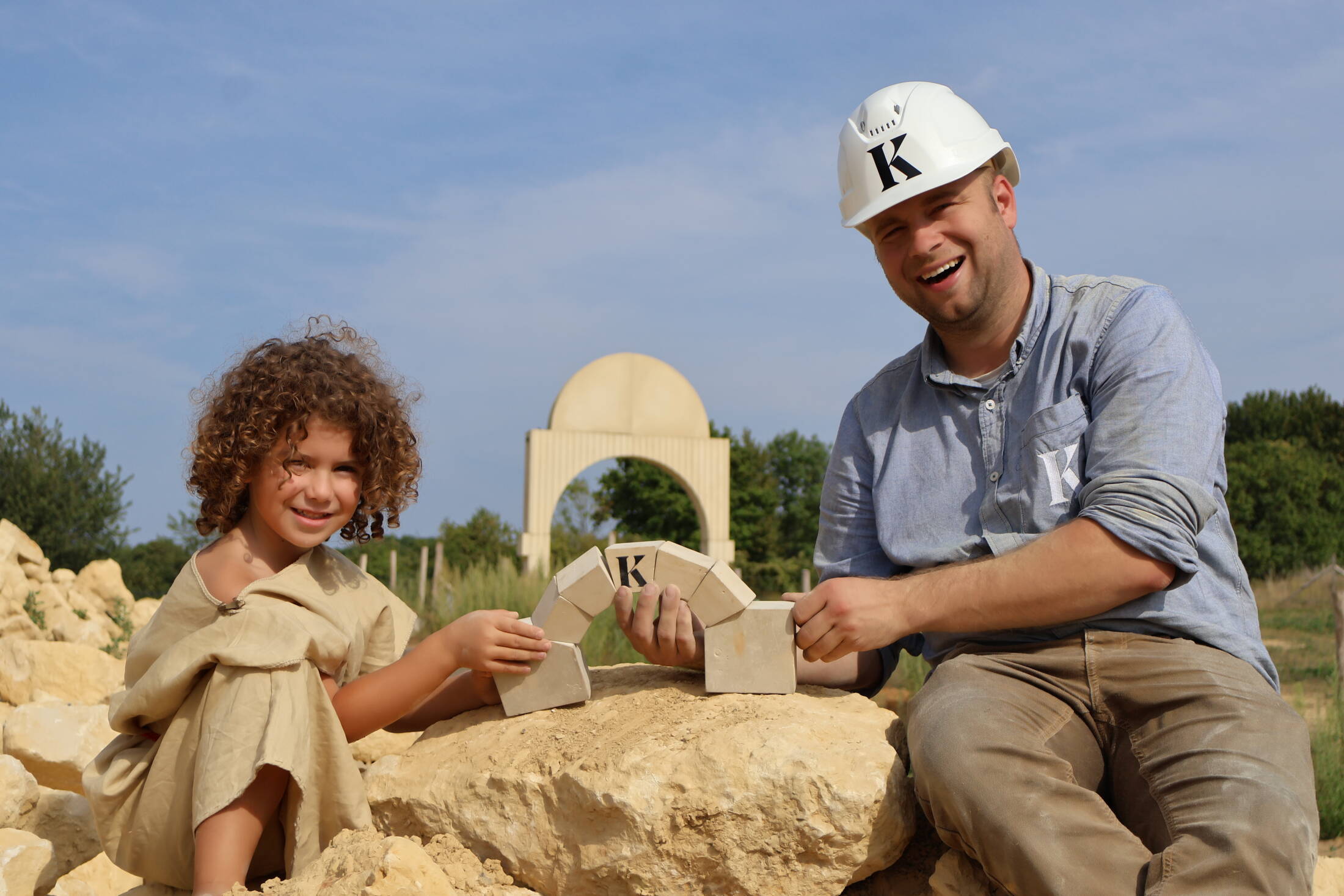
These are the wise words of the infamous Roman emperor Marcus Aurelius – and he was right. Take the Roman road, for example. Nearly 2,000 years ago, it brought people together across the Meuse-Rhine Euregion: Romans, Germanic, and Gaulish peoples. And from 2027 onwards, it will do so again through the interregional project VIA VIA.
VIA VIA unites 13 partners across the Euregion, working together to bring the region’s Roman past back to life. Their collaboration will create a new cross-border route for hikers and cyclists, guiding visitors through Belgium, the Netherlands, and Germany. By connecting the Via Erlebnisraum Römerstraße, the Via Belgica, and the Fruitspoor, this route weaves existing Roman trails into one seamless new journey.
Along the VIA VIA-route, you will be able to explore nine immersive hotspots – each offering a unique window into the fascinating glory days of the Roman Empire. Through immersive experiences – from themed routes and 3D characters to immersive rooms, interactive exhibitions, landscape elements, and audio fragments — these hotspots invite you to rediscover the Roman history we share.
On your way to the various hotspots, you will pass through breathtaking rolling landscapes, vibrant cities, and impressive archaeological landmarks. Complete the entire route in one walking and cycling trek or take your time exploring it at your own pace. Tienen, Tongeren, Maastricht, Heerlen, Voerendaal, Simpelveld, Aachen, and Jülich are perfect starting points and stopping places, each with its own compelling Roman story. You choose how to shape your Roman journey.
Can’t wait? Discover the many Roman attractions now on our interactive map!
Meet your guides on the VIA VIA route: the Roman merchant family of Quintus Iulius Viator. Living in the second century CE in the thriving Roman Meuse–Rhine Euregion, the family travelled across the region for trade, visiting its most important cities. Their travelogue captures the stories, impressions, and encounters of their journeys.
Through AI, the merchant family will be brought vividly back to life. They will share their lived experiences at each VIA VIA hotspot, allowing you to explore the region through their eyes.
Follow in their cart tracks and immerse yourself in the vibrant world of the Roman past.
When modern-day archaeologist Emma Meyers inherits a chest from her great-great-grandfather – an amateur archaeologist at the end of the nineteenth century – she discovers a wooden writing tablet. Examining the scratches on the wood, she uncovers a unique travelogue by a merchant family from the second century AD. Many fragments have been preserved.
Intrigued, she devotes herself to reconstructing the story. To fill certain gaps, she follows in the footsteps of Quintus Iulius Viator and his family. She visits the destinations mentioned in the travelogue and arrives in present-day Tienen, Tongeren, Maastricht, Heerlen, Voerendaal, Simpelveld, Aachen, and Jülich. With the help of contemporary technologies and the latest archaeological techniques, she verifies the content. This results in a comprehensive work with the centuries-old travelogue as its backbone.
Quintus Iulius is an impulsive dreamer. Time and again he throws himself into trading ventures with little chance of success. His ambition? To find the hole in the market and earn enough to secure a golden future for his family – and perhaps gain entry into the patrician families in one fell swoop. His trade missions take the family to various places in the Meuse-Rhine-Euregion: Iuliacum (Jülich), Aquae Granni (Aachen), Traiectum ad Mosam (Maastricht), Coriovallum (Heerlen), and the surrounding villa landscape of Simpelveld and Voerendaal, Atuatuca Tungrorum (Tongeren) and Aeria (Tienen). In his wake, we discover how people thought and lived. And how much it mirrors life today.
Or, as his son Marcus Iulius Viator writes in the travelogue: ‘People are always searching for hopeful stories. Of healing, love, protection, and a safe afterlife. My father understood this better than anyone and set his merchant’s gaze on unique objects that each tell a powerful story.’
Ammulva Iucunda has Germanic ancestors who once held high positions within the local tribes. After the arrival of the Romans, her family acquired a piece of land and built a villa complex on it. Ammulva left all this behind when she followed her heart and married Quintus Iulius. Her husband does everything he can to restore to her the luxury and comfort she lost ‘because of him.’
Ammulva is inquisitive, adventurous, and has a quick and open mind that often clashes with the mores of her time. She looks forward to each new trading mission, to each new journey with the cart along the Roman road, to each new town and place they visit. In this way, she absorbs culture in all its facets and passes on her newfound wisdom to her children. Ammulva is critical of generally accepted ‘truths’ and constantly questions things. She records her travel impressions in sketches. She does so secretly, for in the second century it is considered improper for a woman to draw.
Marcus Iulius is 13 years old. He loves stories from the past, digging things up, and unravelling secrets with passion. He is a fan of the Roman emperor-philosopher Marcus Aurelius and quotes him at every opportunity: ‘What follows is always connected to what came before.’ His admiration for Roman culture is great. This sometimes leads to discussions with his parents, who also experience the negative aspects of Roman rule. Iulius is the principal author of the travelogue, interpreting events around him from the lens of his own era.
Julia Ammulva views the world with the imaginative and unguarded gaze of a 9-year-old girl. She adores the realm of the gods and their rites and stories. She daydreams about the future and even has an imaginary friend: her late dog Lupula. Julia dreams of becoming a seer. Her dreams are very vivid and she talks about them incessantly. Her mother constantly pulls her back to reality. The dramatic irony is that her dreams truly actually give her glimpses of the future, bridging the gap between the second and twenty-first centuries.

Veliquid eariberendae ped qui qui ommolor aeseque nusciduntor aliquatem
The Gallo-Roman Museum: A Window onto the Distant Past, Enriched with a New Immersive Room

Geospatial Data Science and City Information Modeling (GeoScITY) Lab - Liège Université

Maastricht: visibility and experience of Roman Heritage
The Roman Museum Heerlen: Gateway to the Roman region

Aachen: a city built on Roman foundations

Simpelveld: Where Roman history takes shape in a new landscape park

Jülich Citadel Museum: from Roman Vicus to Renaissance Fortress

Tienen: so much more than a Gallo-Roman vicus
Tongeren-Borgloon: a journey through time and landscape

Veliquid eariberendae ped qui qui ommolor aeseque nusciduntor aliquatem

Voerendaal: Making the Roman Past Visible

Constructing the Limes: Studying the Lower Germanic Limes


The Interreg Meuse-Rhine program recognized the VIA VIA tourism project as a good initiative for an implementation amount of €4,567,252.40 and granted an ERDF contribution of €2,283,626.17. The project is also supported by the European Union, with co-financing provided by the Wirtschaftsministerium Nordrhein-Westfalen, the Province of Limburg, and Regio Deal Parkstad Limburg.